


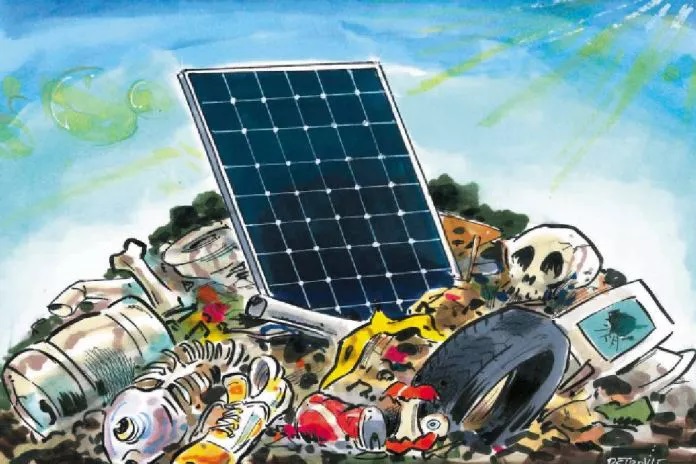
Solar panels, the life of which went out, in the field of waste management are attributed to e-waste. This includes solar modules that have failed. This category of garbage is labeled “e-waste”. Throughout 2015, almost 44 million metric tons of electronic waste were disposed of around the world. According to experts, this volume will increase to 50,000,000 tons this year.
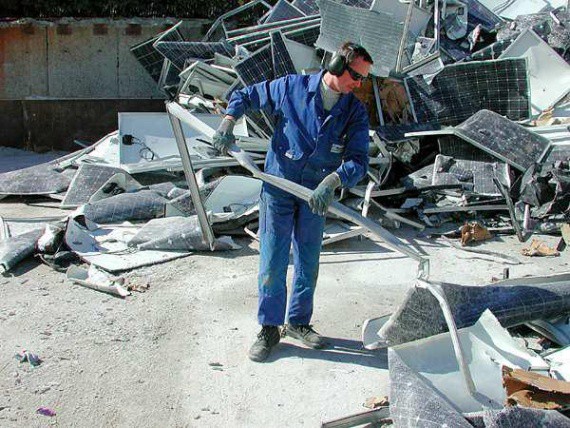

The International Renewable Energy Agency IRENA and the International Energy Agency published a report that could become an algorithm for the most efficient utilization of solar panels. This document was published in 2016. Scientists predict that by 2050, the volume of electronic debris in solar energy will be about 70-80 million tons. Do not forget about the growth of solar power. Some sources indicate that the capacity in the field of solar energy will be 4,500 GW by 2050 (now this figure is 400 GW).
In the European Union, the recycling of photovoltaic modules is regulated by the Waste Electrical and Electronic Equipment Directive. In EU countries, disposal in accordance with the Directive is mandatory.
The process of utilization of solar modules can be divided into two types:
– rough processing (extraction of materials included in the panel – copper, aluminum, glass);
– fine processing (extraction of chemical elements that are part of the solar module).


Fine processing includes three stages:
1) preliminary preparation, which consists in removing the junction box and the metal frame of the device;
2) removal of the lamination coating (film) or delamination;
3) extraction of metals and glass components.
Today, in European countries, about 70 percent of the components of the panels that are to be disposed of are recovered for reuse. In addition, international Directives regulate compliance with the content of hazardous elements in secondary raw materials (cadmium and selenium – not more than 1 mg per kilogram for silicon panels and not more than 10 mg – for non-silicon, lead – not more than 100 mg in dry matter).
The profitability of processing photovoltaic modules is questionable. However, international law strictly controls this process. Reducing the cost of solar equipment opens up opportunities to increase the flow of investment in the utilization of photovoltaic panels.