


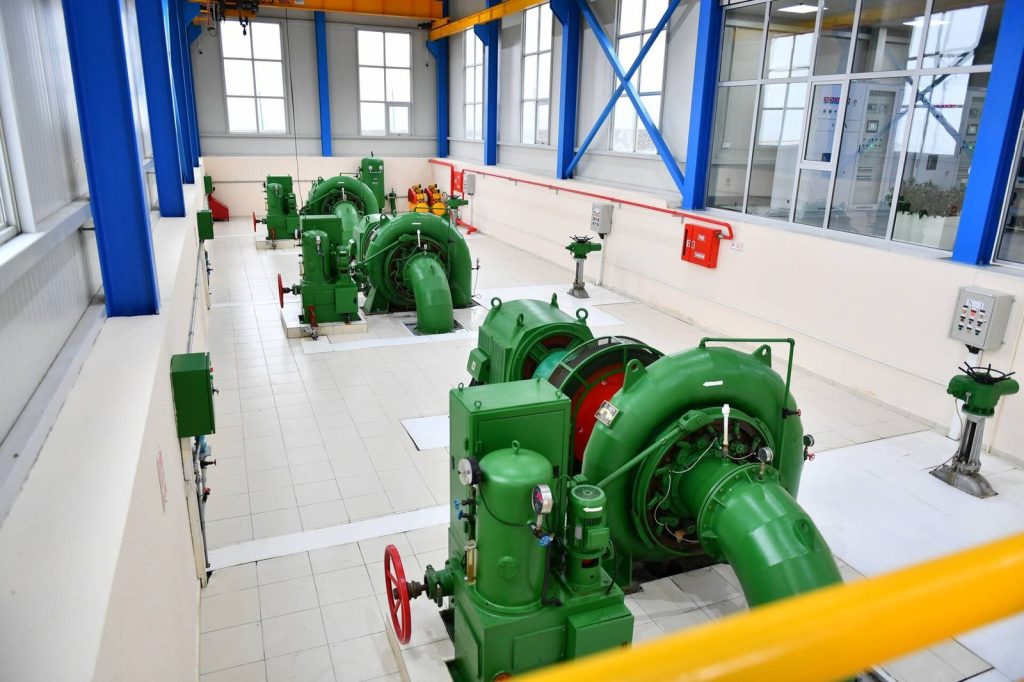
Micro hydro under 100 kW is proving itself as a viable alternative to diesel generators for remote homesteads and communities in mountainous terrain. An international review by Life Off-Grid makes the case clearly: even a modest stream can meet the energy needs of several homes, a school, or a workshop — entirely off the central grid. For anyone running a farm or small community in highland areas, this approach cuts dependence on both fuel supply chains and an unreliable grid in one move.
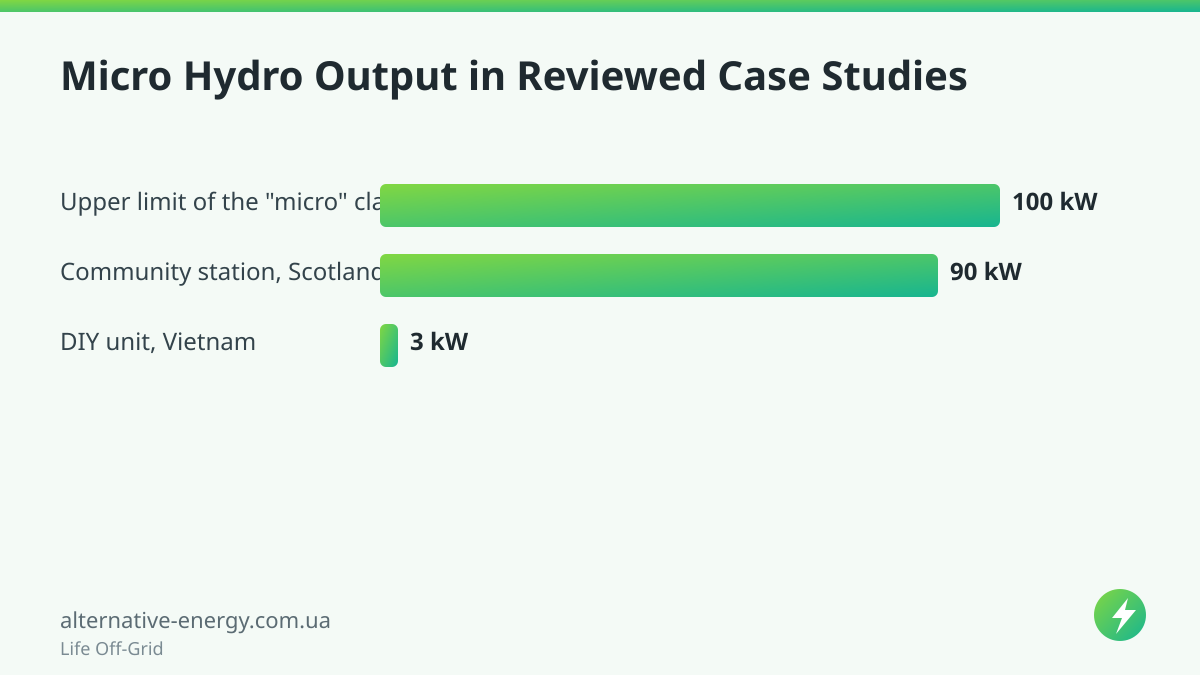
- Scotland: a community micro hydro station of around 90 kW sells surplus power back to the grid.
- Nepal (Rukum district): micro hydro installations completely displaced diesel in isolated mountain villages.
- Vietnam: a DIY station built from bamboo turbines and motorcycle alternators.
- The “micro” class — under 100 kW: the sweet spot for a single farm or small rural community.
Scotland, Nepal, Indonesia: Three Paths to Energy Independence
A community micro hydro plant in the Scottish Highlands has been running at roughly 90 kW since 2022. It powers several homes and communal facilities, and the surplus fed back to the grid generates secondary income that funds new local renewable energy projects. This is an unusual setup for micro hydro — most systems are sized purely for self-consumption — but here the community ended up with both reliable power and a funding stream.
In Nepal’s Rukum district, micro hydro installations replaced diesel generators in villages that the national grid never reached. According to Life Off-Grid, electricity reached homes, schools, and local workshops, and residents received training in equipment maintenance — creating jobs in the process. A comparable outcome was recorded in North Sumatra, Indonesia in 2021: a remote village moved from intermittent diesel power to stable round-the-clock electricity, now also used to run agricultural water pumps.
Vietnam: Building Micro Hydro From What You Have
The most striking example of how accessible this technology can be comes from northern Vietnam. Local residents built a functioning micro hydro unit from materials at hand: bamboo channels direct water flow into metal barrels, and the rotation is transferred to a hand-carved bamboo turbine. The generator is a salvaged motorcycle alternator. A setup like this produces just a few kilowatts — a typical DIY unit in this class delivers around 3 kW — but that is enough for lighting and basic electronics across a handful of households.
The underlying physics has not changed since the twentieth century: water falling from height strikes a turbine (usually a Pelton wheel for fast, narrow jets), which turns a generator. The two numbers that matter are head (the vertical drop) and flow rate. Multiplied together, they give you hydraulic power; the rest is a question of turbine and generator efficiency.

What This Means for an Off-Grid Farm in the Highlands
Mountain regions with numerous small streams are a natural fit for micro hydro. Unlike solar, hydro does not depend on weather or season — it delivers baseload power around the clock as long as the stream is flowing. This allows it to cover continuous background loads (refrigeration, pumps, lighting) without a large battery bank, while solar panels handle the daytime peak as a complementary layer.
The Scottish case adds another dimension: micro hydro can be more than an energy independence tool — it can become a source of community revenue, provided local regulations allow grid export. The Vietnamese example makes a different point: the capital barrier to entry can be extremely low when simple components are available locally. This contrast between industrial-grade micro turbine technology and workshop-built systems often determines which path actually scales in a given community.
Frequently Asked Questions
How much electricity does a micro hydro system actually produce?
The “micro” class is defined as up to 100 kW. The Scottish community station runs at around 90 kW — enough to cover several households and shared facilities. DIY setups like the Vietnamese example produce just a few kilowatts, sufficient for basic lighting and household electronics in one or two dwellings.
Do you need a large river?
No. Every documented case here runs on small mountain streams. What matters is not channel width but vertical drop and a consistent flow rate. That is precisely why micro hydro is traditionally seen as a technology for highland and foothill regions — for instance, for communities pursuing full energy independence along the lines of certain villages in the EU.
The practical takeaway is straightforward: micro hydro is not an exotic niche — it is a proven range of working solutions spanning everything from a one-weekend DIY build to a full community power station. Combined with unconventional renewable energy sources, it can take entire isolated homesteads off diesel wherever there is sufficient water head available.
Sources: Life Off-Grid
Photo: Press Service of the President of the Republic of Azerbaijan / Wikimedia Commons / CC BY 4.0