


The European Union currently has a host of technical specifications that enable energy needs to be met at the expense of REE. The only condition is their large-scale and systematic application. These are the data in the “Energy Atlas of Europe” – the reports of experts on the current position of alternative energy. In addition, the report outlines prospects for the development of the industry in Europe by 2050 inclusive.
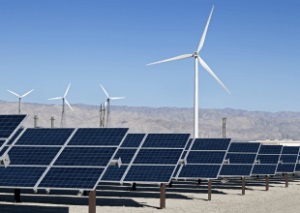

And now the accumulated experience in the field of R & D to build and launch large-scale capacity enough for the further globalization of this type of energy. It should be noted that the volumes of generated net energy are directly dependent on weather and time of day. The accumulation of “green” energy is now becoming one of the most important issues on which the scientific world community works.
Fossil fuels currently have the advantage of heating / cooling the housing and transport sector. Today, the EU pays particular attention to expanding the use of RES in these areas.
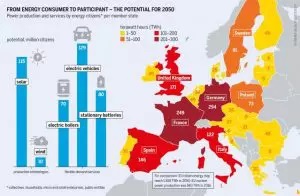

The authors of the report gave a detailed discussion of the relationship between the spheres of activity and noted that excess electricity in such a coordinated work of all sectors can be used to heat the house, to save heat in the networks of heat supply and charging electric cars. It is this strategy that will make it possible to minimize the use of fossil fuels and reduce harmful emissions into the atmosphere.
The EU has a specific declared objective of climate change – to reduce by 40% the amount of greenhouse gases emitted to the environment by 2030 (1990 figures are taken as reference point). In order to achieve this goal, there is an urgent need for progress in the transport sector, production processes, thermal energy production and integration with energy.
The energy report was published by the European Federation of RES and the Green European Foundation with the assistance of the Henry Boll Foundation.