

Innovative development is the work of a professor from the University of Fukushima. Kunio Shimada managed to develop a special rubber, capable of generating electricity, using the energy of the sun or kinetic. In addition, the professor asserts that rubber can also accumulate the generated energy and store it.
Now, the professor is engaged in issues of patenting for his innovation in Japan. This development has no analogues in the world. Kunio Shimada stated that electrically conductive rubber could be use in the process of producing an innovative skin for robotics or photovoltaic panels that will differ in their high impact resistance.
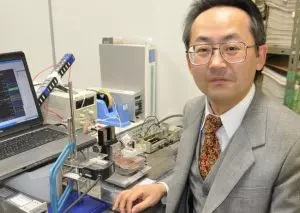

It is report that the professor used to work on the creation of rubber that conducts electric current. The work was rather successful, which allowed further transforming this experience into the realization of a new idea.
Kunio Shimada in 2001 developed magnetic compounds. The composition of this material includes magnets processed by melting. In addition, the composition of Magnetic Compound Fluid is a natural rubber, widely used in the production of balloons. The next stage in the development of the material was to vulcanize the resulting mixture. However, the professor changed plans and electrified the material. This approach allowed producing rubber, which had a high degree of electrical conductivity.
Traditional solar panels have a solid structure and are subject to destruction due to environmental influences. Rubber, which can conduct a good electric current, has the ability to expand and contract. These properties are manifest under the influence of:
– sunlight;
– strikes;
– vibrations.
Plus – it also generates electricity.
It should be note that 18 years ago the Nobel Prize winner in the field of chemistry proved the electrical conductivity of plastics. Scientist Hideky Shirakawa challenged the traditional notion that polymers having high electrical conductivity cannot be produce from plastic.
Kunio Shimada reported that it was this discovery that triggered his work on electrically conductive rubber.
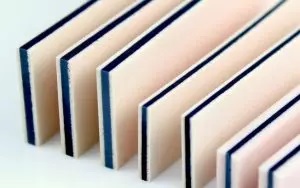

This discovery can make a real breakthrough both in the field of robotics and in solar energy. After all, electrically conductive rubber can be use to produce solar panels, while their durability and impact resistance will significantly increase.