


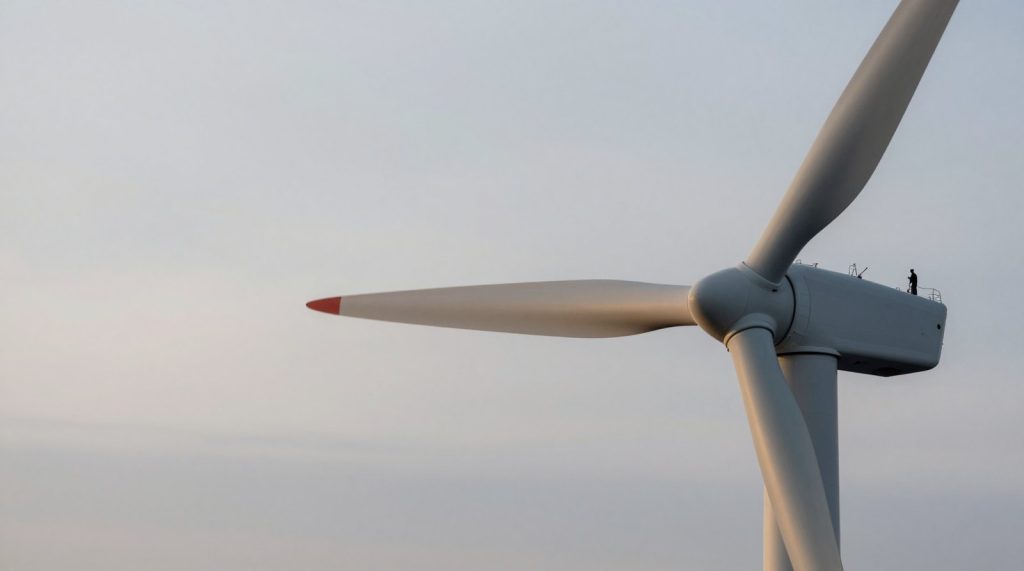
University of Twente, together with We4Ce Engineering, 2-B Energy Holding, and Suzlon, has launched ECOWIND — a project built around three interconnected innovations designed to make wind turbines last longer while requiring less raw material. At the core is a modular wind turbine blade with a replaceable tip made from recyclable thermoplastic, paired with intelligent LiDAR-based load control and a lightweight structural concept for the next generation of offshore machines.
Key points:
- The blade tip can be swapped out without removing the entire blade; the material is recyclable thermoplastic.
- LiDAR anticipates incoming wind gusts and adjusts the blades proactively, reducing mechanical loads across the structure.
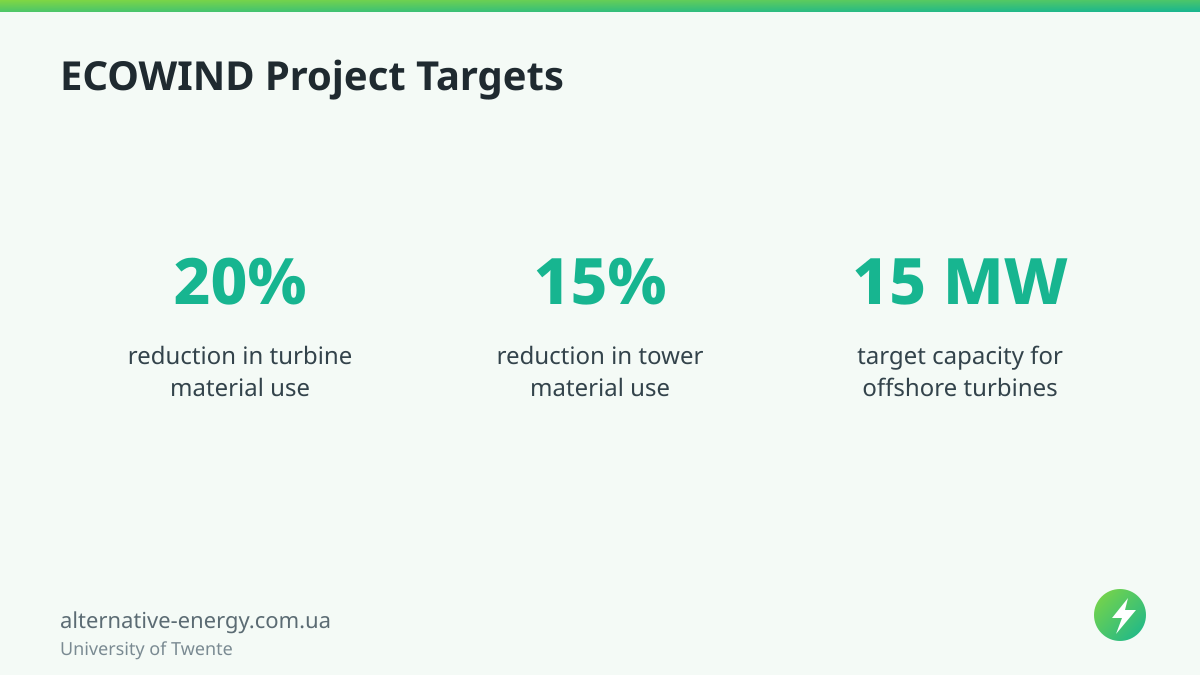
- The goal is to cut turbine material consumption by 20% and tower material use by 15%.
- Field testing will take place on an operational 6 MW turbine at Eemshaven, the Netherlands.
Why blades need a replaceable tip
According to University of Twente, as turbines grow in size and output, the volume of raw materials required scales with them. At the same time, blades are notoriously difficult to recycle, and they are vulnerable to leading-edge erosion, lightning strikes, and fatigue — all of which drive up maintenance costs and lead to premature replacement.
ECOWIND’s answer is a modular design: the tip section is manufactured from recyclable thermoplastic and can be detached and replaced without dismantling the full blade. The logic is straightforward — the leading edge and outermost sections are the first to degrade, since tip-speed is highest at the blade’s extremity, accelerating erosion there more than anywhere else.

LiDAR that sees the wind coming
The second strand of the project is an intelligent turbine control system that uses LiDAR measurements to forecast incoming gusts. The turbine can then adjust its blades ahead of time, cutting the mechanical stress on the entire structure. According to the partners’ preliminary calculations, all three innovations combined should reduce turbine material consumption by 20% and tower material use by 15%.
The third strand integrates both solutions into a lightweight structural concept for the next generation of offshore turbines rated at 15 MW and above. Machines in that class are central to Europe’s offshore wind ambitions, and reducing their material intensity is becoming a critical issue for both economics and circularity.
Where it is being tested and who is funding it
The technologies will be validated through prototyping, laboratory testing, and field trials — including on an already-operational 6 MW turbine at Eemshaven. The research at Twente is led by Dr. Hüseyin Özdemir, associate professor in the Engineering Fluid Dynamics group within the Faculty of Engineering Technology; his work focuses on blade aerodynamics, including the effect of leading-edge erosion on performance.
The project is co-funded by the European Union through the European Regional Development Fund (ERDF) for the Eastern Netherlands region. The partners also position ECOWIND as a regional initiative — an effort to establish this part of the country as a hub for circular technologies in wind energy.
What this means for the industry
A modular blade turns two chronic pain points in offshore wind — erosion and end-of-life recyclability — into manageable service tasks. If the concept holds up in field trials, operators will be able to service blades on-site rather than transporting full blade assemblies for repair or disposal, while worn thermoplastic segments can be returned to the recycling stream. For the coming generation of 15 MW offshore turbines, this matters not only for service economics but for material availability.
Alongside related developments — from streamlining blade manufacturing to coatings that reduce lightning damage — ECOWIND adds a fundamentally new layer to the picture: repairability at the level of an individual component. Whether this approach becomes an industry standard will depend on results from Eemshaven; it is a line of work worth following closely for anyone planning offshore projects in Europe.
Sources: University of Twente, EuropaWire
Illustration generated with AI
Prepared by the Alternative Energy editorial team with the help of AI based on the sources listed; facts and figures were checked against them during automated editorial review. How we prepare articles