


How deep does a geothermal borehole need to be for a 150 m² home running a heat pump rated at 6 kW? This is the question our editorial team hears most often from readers planning to replace a gas boiler with a geothermal probe. The answer comes from autarc.energy, with a concrete example and the standard sizing rule per kilowatt of output.
Quick summary:
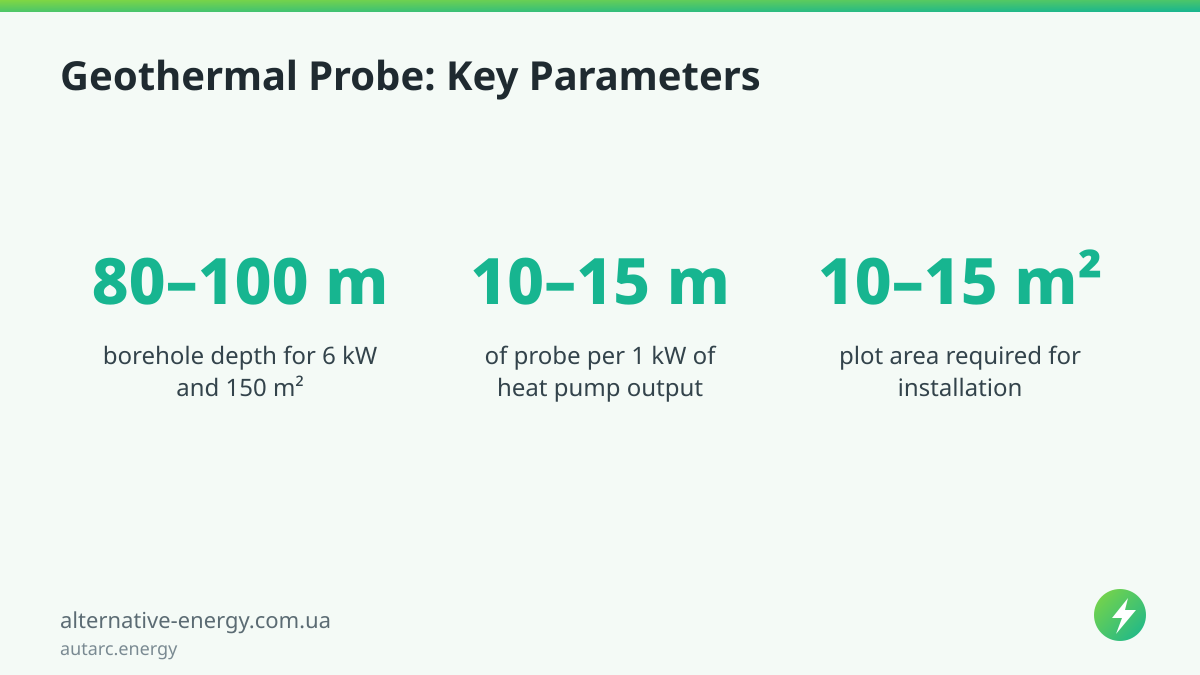
- A 150 m² home with a 6 kW heat demand needs a borehole approximately 80–100 m deep.
- Standard rule: 10–15 m of probe per 1 kW of heat pump output.
- Only 10–15 m² of free plot area is required — drilling is vertical.
- Final depth depends on the thermal conductivity of the ground.
How depth is calculated: a 150 m² example
According to autarc.energy, a single-family home with 150 m² of living space and a 6 kW heat load requires a borehole of roughly 80–100 metres. The calculation rests on a straightforward rule: 10–15 metres of probe for every kilowatt of heat pump output.
The precise number of metres — and whether more than one borehole is needed — is determined by the soil’s specific heat extraction rate. Dry rock yields less heat than moist clay or solid bedrock. In favourable ground conditions 80 m is usually sufficient; in less favourable ones, 100 m or an additional probe may be required. Where multiple boreholes are installed, minimum spacing between them must be observed — the exact distances are confirmed by a design engineer in line with local regulations.

Why soil type is the deciding factor
The probe operates within a sealed loop: a U-shaped plastic pipe is lowered into the borehole and a freeze-resistant brine mixture of water and glycol circulates inside it. The surrounding ground transfers heat to the fluid, so the higher the thermal conductivity of the soil layers, the more efficient the probe. The brine carries that heat up to the heat pump, where it is raised to the temperature required for the heating system and domestic hot water.
autarc.energy is explicit on this point: dry sand delivers less heat than moist clay or rock. On sites with highly conductive ground 80 m is typically enough; on less favourable sites a deeper borehole or additional probes will be needed. This is precisely why a geological assessment is carried out before drilling — without it, the risk of under-drilling or overpaying for unnecessary depth is significant. For a full explanation of how the technology works, see our detailed guide on ground source probes.
Plot space and required setbacks
Drilling a single borehole requires only 10–15 m² of clear surface area, which makes vertical technology viable even on compact plots. The drilling rig is on site for a short window of work, and once installation is complete the ground surface is restored. As autarc.energy notes, because drilling is vertical, no large dedicated working area is needed.
According to autarc.energy, the borehole must maintain prescribed setback distances from neighbouring property boundaries and underground utilities — the specific figures depend on the jurisdiction. In Ukraine, check the applicable distances with your local water authority.
Permits, service life, and risks
Deep drilling is governed by water law: a permit is required because the borehole may intersect groundwater. autarc.energy states that a typical vertical probe runs between 40 and 100 m deep. The deeper the borehole, the more complex the approval process can be — confirm the conditions with your local water authority.
The probe itself is made of plastic and is designed to last more than 50 years with virtually no maintenance. The critical factor is not depth per se, but the quality of the drilling work, borehole grouting, and contractor selection. For a guide to capital costs, our article on geothermal heat pump pricing and payback provides a useful reference point.
What this means in practice. If you are sizing a heating system for a 150 m² home, plan for a borehole in the 80–100 m range — and build in budget headroom for a deeper bore should the ground conditions demand it. At the design stage you need more than a heat loss calculation: a basic geological survey is what separates a well-designed system from one that takes years longer to pay back because of an unnecessarily deep borehole.
Sources: autarc.energy
Prepared by the Alternative Energy editorial team with the help of AI based on the sources listed; facts and figures were checked against them during automated editorial review. How we prepare articles