


Every heating season, the same question resurfaces: what is the heat pump payback period in Ukraine, and does the investment still hold up at current electricity prices? The short answer is that three variables decide everything — what heating system the pump replaces, how well the building is insulated, and whether the household qualifies for the preferential electricity rate for electric heating. Here is what the numbers actually look like.
Key figures at a glance:
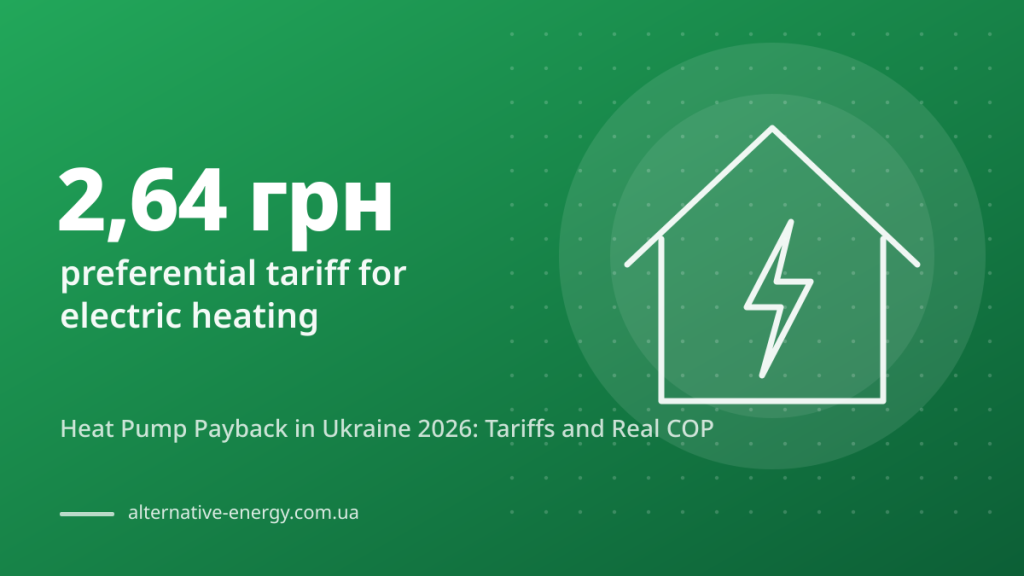
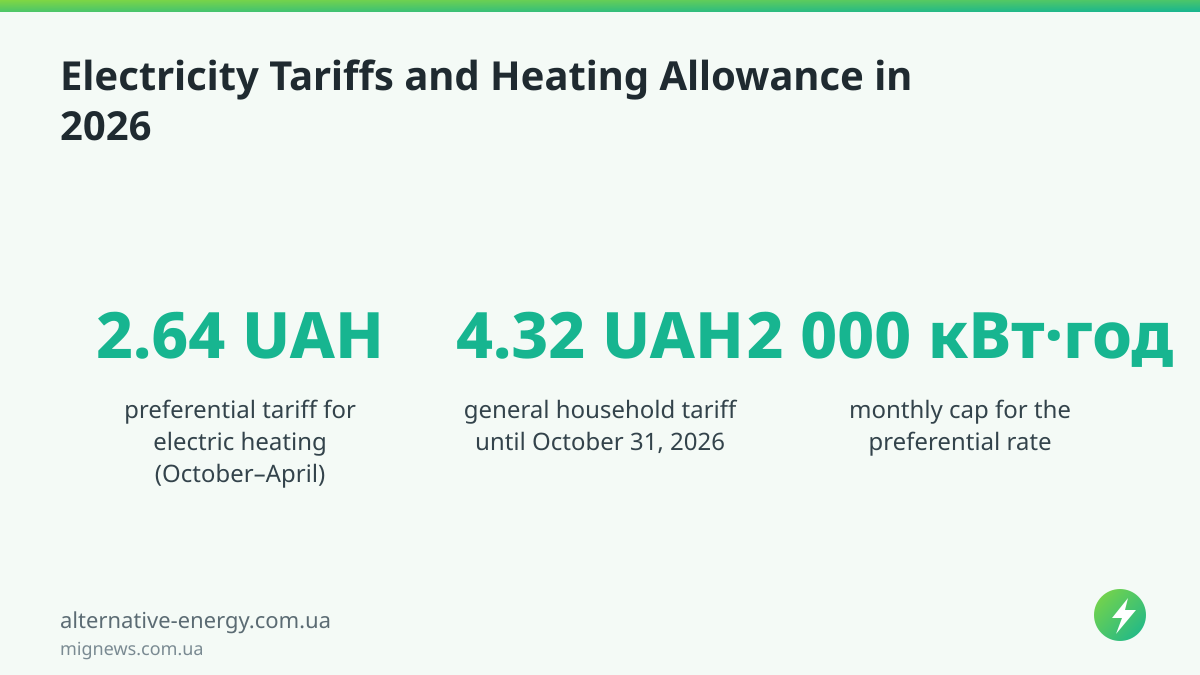
- Preferential tariff for households with electric heating — 2.64 UAH/kWh during the heating season (October–April), capped at 2,000 kWh per month.
- General household electricity tariff — 4.32 UAH/kWh, extended until October 31, 2026.
- Typical coefficient of performance (COP) for a residential heat pump — approximately 4.
- The European heat pump market grew 10.3% in 2025, reaching roughly 28 million installed units across 16 European countries.
How the Electric Heating Tariff Reshapes the Bill
For a heat pump, electricity is the fuel. The rate at which a household buys it directly determines the heating budget for the season. According to mignews.com.ua, the Ukrainian government extended the general household tariff of 4.32 UAH/kWh until October 31, 2026, while households registered as electric heating consumers retain a preferential rate of 2.64 UAH/kWh for up to 2,000 kWh per month throughout the October–April period.
In practice, a home where the heat pump is the primary heat source — and is officially registered as such — will purchase electricity at the lower rate throughout the entire cold season. We covered the eligibility conditions for this benefit in our article on the preferential 2.64 UAH/kWh tariff for electric heating.
What COP Means — and Why the Spec-Sheet Figure Is Misleading
A heat pump does not burn fuel or generate heat from scratch. It extracts low-grade thermal energy from the surrounding air, ground, or a water source, and uses a compressor to raise it to a temperature suitable for the heating system. As the IEA explains and the source cites, a typical residential heat pump operates at a COP of around 4: for every kilowatt-hour of electricity consumed, it delivers roughly four times as much thermal energy into the home.
Under real-world conditions, COP fluctuates with outdoor temperature, the heating circuit’s supply temperature, insulation quality, and operating mode. The colder the weather and the higher the required water temperature in the radiators, the lower the efficiency. This is precisely why in-depth reviews covering the facts and myths about heat pumps stress that the meaningful metric to compare is the seasonal performance factor — not the catalog COP measured at +7 °C.

What Actually Drives the Payback Period in 2026
The source makes the central point directly: a payback calculation starts not with the equipment price list but with a building heat-loss assessment. If a house loses large amounts of heat through the roof, walls, and windows, the compressor will run longer, electricity consumption will climb — and any heat pump, whether air-to-water or ground-source, will take longer to recoup the initial investment.
The second critical variable is which heating system the heat pump is replacing.
The broader European trend also validates the technology: in 2025, the EU heat pump market expanded 10.3% to approximately 28 million installed units across 16 countries. If you are weighing a geothermal option, we recommend our article on the cost and real payback of a geothermal heat pump.
When the Economics Work in the Heat Pump’s Favor
In 2026, a heat pump makes the strongest case in three specific scenarios: the house is well-insulated, the heating system is low-temperature (underfloor heating or large-panel radiators), and the household is registered as an electric heating consumer so it stays within the 2,000 kWh monthly cap at 2.64 UAH/kWh. In that combination, the preferential tariff paired with a COP of around 4 produces the shortest return on investment. In all other cases, the right starting point is not a product catalogue but a heat-loss calculation — because no rated efficiency figure will rescue a December electricity bill in a poorly insulated home.
Sources: mignews.com.ua
Prepared by the Alternative Energy editorial team with the help of AI based on the sources listed; facts and figures were checked against them during automated editorial review. How we prepare articles