


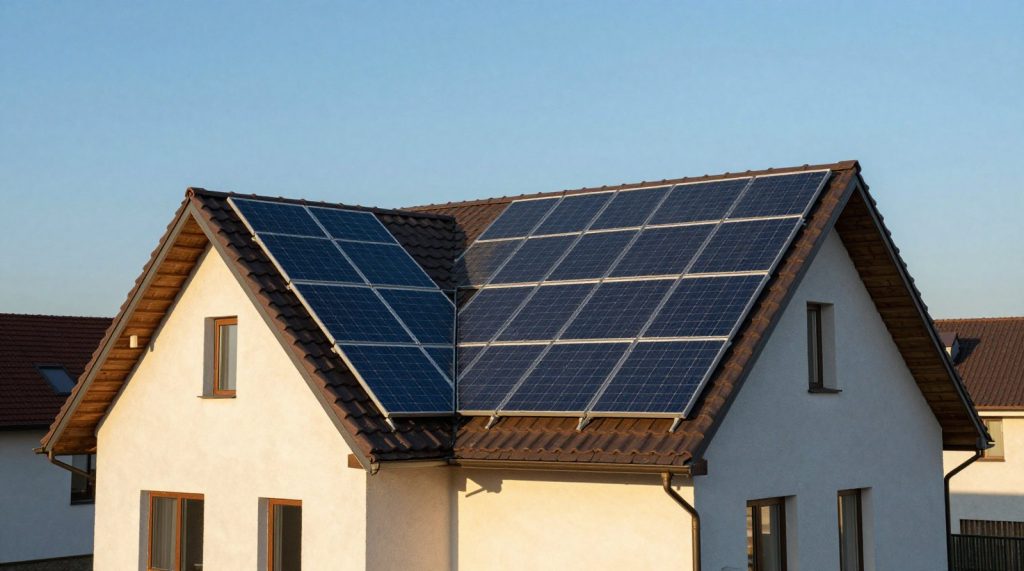
A 5 kW home solar system in Ukraine costs $5–6k in 2025, and payback periods have fallen from 10–15 years down to just 4–5.
Key figures from the research:
- An off-grid 5 kW home system — $5,000–6,000;
- Payback period — 4–5 years, down from the previous 10–15;
- In 2024, Ukraine’s residential solar market tripled in size.
How much does a 5 kW solar system cost and when does it pay off
The average price of an off-grid 5 kW solar power plant with battery storage is $5–6k. In this configuration, according to the column’s authors, the investment returns in 5–10 years — the exact timeframe depends on upfront costs, electricity tariff dynamics, and household consumption levels.
Remove the expensive batteries and build a self-consumption-only setup, and payback shortens to 4–5 years. That base configuration can be expanded with an energy storage system later as needed. Cost reductions have also been driven by falling panel prices: according to figures cited in the article, the cost of solar panels dropped from 216 to 100 index units in 2024. Those exploring a partial subsidy for solar installation or preferential loans for individuals and housing associations can cut their payback period further still.
Why Ukrainians are going solar
The war and widespread blackouts have fundamentally shifted public perception. In 2023, 52% of respondents described themselves as “somewhat aware” of the benefits of solar energy; by 2025, nearly 40% hold a firmly positive view, and over 32% plan to install their own solar power plant. Just 4.9% remain skeptical.
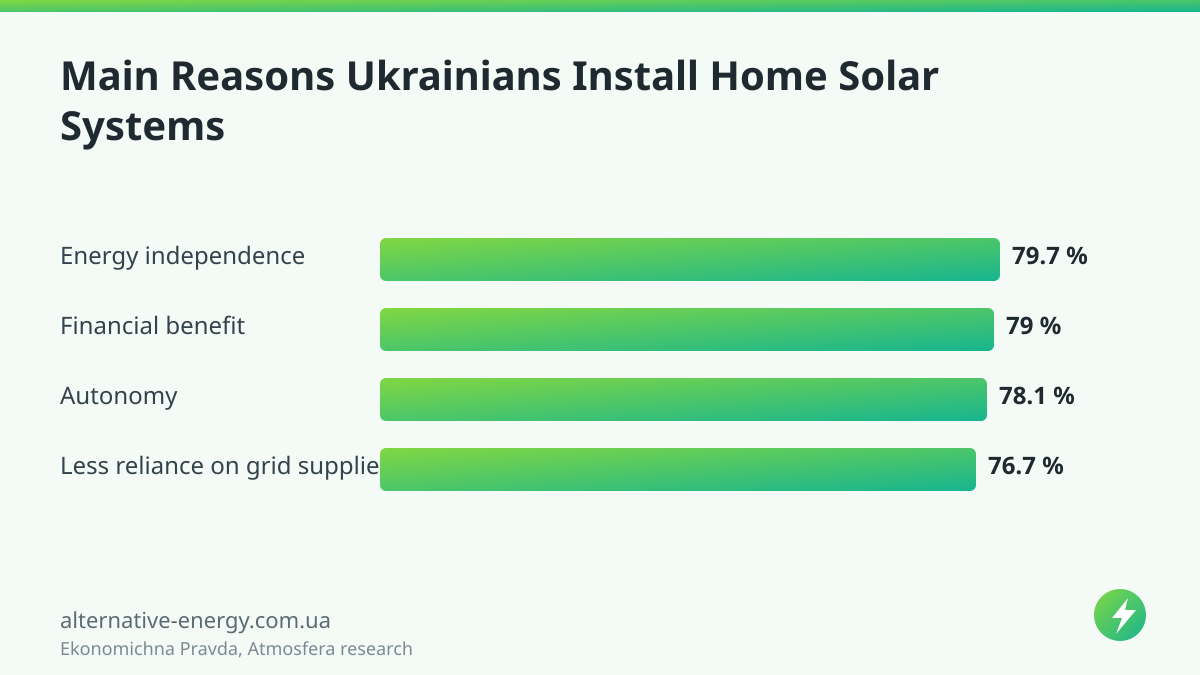
In the B2C segment, the motivations are primarily about comfort and autonomy — financial savings come second. Survey respondents cited:
- 79.7% — energy independence;
- 79% — financial benefit, lower utility bills;
- 78.1% — autonomy, partial or full self-sufficiency;
- 76.7% — reduced dependence on traditional grid suppliers.
Environmental concerns did not top the list. The column’s authors also highlight an unexpected side benefit owners hadn’t anticipated: an off-grid solar system provides more stable voltage, which has a positive effect on sensitive household appliances.

What holds people back: barriers and a regional picture
Despite falling prices, 60.1% of respondents still cite slow payback as a barrier, 59.2% point to high equipment costs, and 60% flag a lack of simple, accessible information about solar systems. Another 40.1% distrust contractors and equipment quality, while 38.9% find it difficult to identify a reliable installer.
The most active regions for solar adoption are Kyiv city, Kyiv, Dnipropetrovsk, and Odesa oblasts. In western Ukraine, purchasing decisions are often driven by word of mouth, with trust in companies from other regions playing a significant role. Meanwhile, utility-scale solar power plants are being actively developed near the western border to sell electricity on the open market.
Ukrainians most commonly search for information on solar systems via Google (41.49%) and YouTube (32.17%); personal recommendations account for 23.31%, social media 19.58%, and forums 18.65%. The research authors caution that popular videos create the illusion that a system can be assembled independently “with just a few wires” — and the consequences of that overconfidence regularly make the news.
Conclusion: how to read these figures before buying
For anyone running the numbers on their own system, the baseline is clear: $5–6k for an off-grid 5 kW setup with battery storage, or a 4–5 year payback for the version without. If the priority is staying powered through blackouts, the full configuration with an energy storage system is the logical choice; if the goal is cutting electricity bills, it makes sense to start with the base system and scale up over time.
It’s also worth tracking government programs: in August 2024, the Cabinet of Ministers instructed ministries and local authorities to install solar systems and energy storage on the rooftops of schools, hospitals, and administrative buildings by the end of 2025 — a move that could sustain steady demand for professional installers. For a broader look at how large the private solar segment has grown, see our article on the number of registered residential solar power plants in Ukraine.
Sources: Економічна правда
Illustration generated with AI
Prepared by the Alternative Energy editorial team with the help of AI based on the sources listed; facts and figures were checked against them during automated editorial review. How we prepare articles