


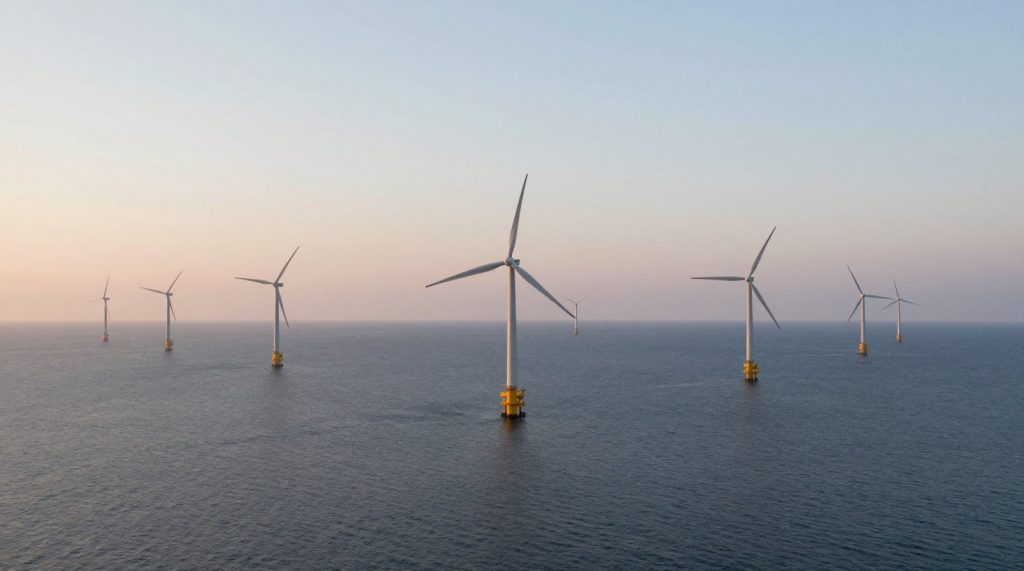
Japan is placing a major bet on floating offshore wind — and it is doing so alongside one of the world’s leading turbine manufacturers. On 29 October 2026, Japan’s Ministry of Economy, Trade and Industry (METI) and Siemens Energy signed a Memorandum of Cooperation (MOC) that sets out three priorities: deploying floating offshore wind farms, building out the supply chain, and developing a skilled workforce. Alongside the signing, Siemens Energy announced the creation of Asia’s first strategic operations and maintenance hub, to be located in Hokkaido.
Key points:
- Parties: METI (Japan) and Siemens Energy; the document is a Memorandum of Cooperation (MOC).
- Three focus areas: floating offshore wind farms, supply chain development, and workforce capacity building.
- Siemens Energy’s first O&M hub in Asia will be established in Hokkaido.
- The stated goal of the hub is to help strengthen the resilience of the wind power supply chain.
Three priorities of the memorandum
According to offshorewind.biz, the agreement covers the deployment of floating offshore wind projects in Japan itself, the development of a local supply chain, and the expansion of workforce capacity — all aimed at strengthening the country’s wind energy industrial base.
Floating wind farms make it possible to install turbines where the seabed is too deep for fixed-bottom foundations. Platforms held in place by mooring lines and anchors allow turbines to be positioned further from shore, where wind resources are more consistent and abundant.
The Hokkaido hub: servicing turbines close to where they operate
Siemens Energy separately announced the establishment of Asia’s first operations and maintenance (O&M) hub, to be based in Hokkaido. The company states that the hub is intended to “help strengthen the resilience of the wind power supply chain.”
For Japan, this means turbine servicing and spare parts supply will take place close to project sites. For Siemens Energy, it represents a strategic anchor point for future projects across the country.
Why this public-private partnership model is worth noting
What makes the Japanese memorandum stand out is that it bundles all three elements — technology deployment, supply chain, and workforce development — into a single document, rather than treating service infrastructure and training as afterthoughts. For countries planning to develop offshore wind from scratch, this is a useful reference point when negotiating with global turbine manufacturers: if the route is through technology imports, it pays to negotiate localised servicing and engineering training at the same time.
For broader context, see our coverage of offshore wind energy development and an earlier analysis of Siemens’ outlook on offshore wind costs, which traces the direction this sector’s economics have been heading.
It will be worth watching which specific floating wind projects in Japan receive support under the new memorandum — that will determine how quickly the Hokkaido hub reaches operational capacity, and whether it becomes a regional anchor for neighbouring Asian markets.
Sources: offshorewind.biz
Illustration generated with AI
Prepared by the Alternative Energy editorial team with the help of AI based on the sources listed; facts and figures were checked against them during automated editorial review. How we prepare articles