


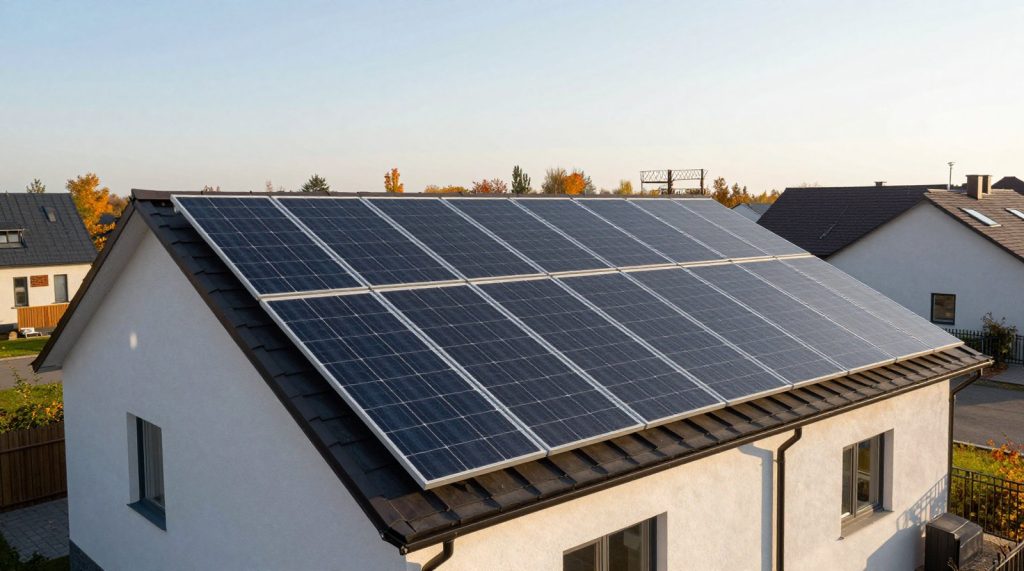
On October 1, 2026, Ukraine’s EU-aligned renewable energy law No. 4963-IX entered into full force. It restructures the permitting system for renewable energy sources (RES), introduces accelerated development zones, updates feed-in tariff rules, and legalizes energy communities. For rooftop solar plant owners, this means shorter timelines and significantly less red tape.
Key changes at a glance:
- permit for a rooftop solar power plant — up to 3 months; for installations under 100 kW — 30 days;
- each authority in the approval chain issues its decision within 30 days instead of 45;
- citizens and businesses may form energy communities to jointly produce and sell electricity.
A New Model for Launching RES Projects
According to ecopolitic.com.ua, citing an analysis by ExPro Consulting, the Verkhovna Rada passed the law on September 2, 2026, based on government bill No. 14271. The document implements the European RED III directive, which identifies the acceleration of permitting procedures as a critical condition for expanding new capacity.
The model rests on four pillars: designation of eligible territories, priority status for RES projects, a one-stop-shop principle, and firm statutory deadlines. The law prioritizes already developed and man-made sites — from rooftops and parking lots to landfills, industrial brownfields, and degraded land. Accelerated development zones will exclude nature reserves, UNESCO-listed sites, internationally significant wetlands, biosphere reserves, and habitats of rare species.
How Long Will Permits Take Now
For solar power plants installed on rooftops and building facades — facilities not classified as energy infrastructure — the maximum permitting period is three months. For solar plants rated under 100 kW, that timeline shrinks to 30 days. Reconstruction and repowering of installations up to 150 kW — up to 12 months. Within accelerated development zones, other RES facilities receive approvals within 1 year, and offshore wind farms — within 2 years. Outside such zones, timelines are longer: 24 months for onshore projects and 36 months for offshore wind. In cases of force majeure, deadlines may be extended by up to 6 months for new projects and up to 3 months for reconstruction.
Every authority in the approval chain must also issue its decision within 30 days instead of the previous 45. Construction of RES facilities in accelerated development zones is exempt from the environmental impact assessment (EIA) procedure — provided the developer fulfills the compensatory measures defined by the government.

What Changes for the Feed-in Tariff and Energy Storage
Residential solar power plants enrolled in the feed-in tariff are now required to consume at least 10 kWh per month for household needs. If actual consumption falls short, the surplus is purchased by the universal service provider at the day-ahead market price, but no higher than the retail rate for residential consumers. Emergency repairs are no longer grounds for suspending the feed-in tariff — previously, this scenario was not addressed in legislation. For more on the economics of the feed-in tariff, see our article on solar panel profitability and current tariffs.
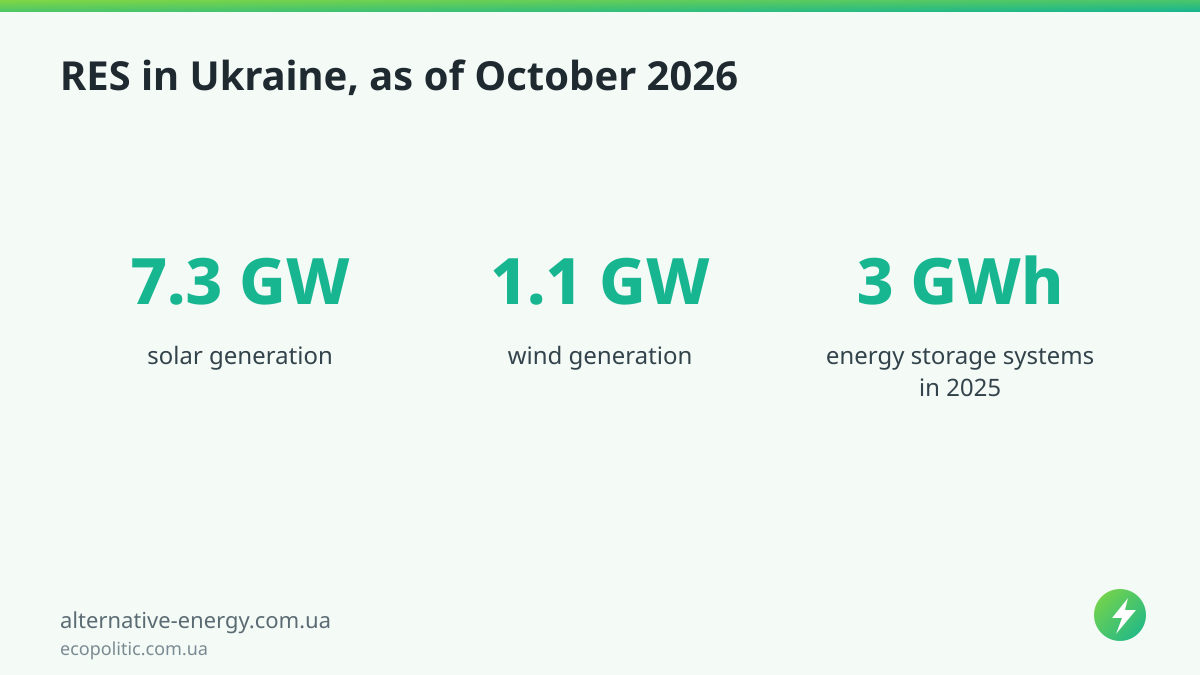
For energy storage systems, the grid connection fee will be calculated based on the higher of two figures — charging capacity or discharging capacity. A dedicated rate has been introduced to prevent double billing caused by the bidirectional operation of batteries. As a reminder, Ukraine ranked fourth in Europe for installed energy storage capacity in 2025, with total capacity reaching nearly 3 GWh — five times more than in 2024.
Energy Communities and the New Role of the Consumer
The law introduces the concept of energy communities for the first time — associations of citizens and businesses that jointly produce, consume, store, and sell energy. Such communities may enter the market independently or through an aggregator and participate in energy trading. New consumer categories are also established: “consumers of self-generated renewable energy” and jointly acting consumers. This is a natural continuation of the trend discussed in our article on the role of private solar power plants in Ukraine’s renewable energy sector.
The national target for the share of RES in final energy consumption is enshrined in law for the first time, with a unified calculation methodology covering electricity, heat, cooling, and transport. Cooling has been officially recognized as part of the renewable energy sector — cold derived from natural sources and from efficient heat pumps can be counted toward the national target.
Context: Where Ukraine’s Renewables Stand Today
At the time the law came into force, Ukraine’s installed solar generation capacity stands at 7.3 GW and wind generation at approximately 1.1 GW. The share of renewable energy in total electricity generation in 2025 was 11%. The Zakarpattia region is also planning to build the country’s first geothermal power plant. For a broader overview of where investors are directing capital, see our article on investment directions in alternative energy in Ukraine.
What this means in practice. For commercial projects located in accelerated development zones, the primary benefit is exemption from EIA requirements and a firm one-year cap on the entire approval process. If you are planning to launch a solar plant in 2026–2027, it is worth checking with your local grid operator whether your site falls within a future accelerated development zone: both the permitting timeline and the required document package depend directly on that designation.
Sources: ecopolitic.com.ua
Illustration generated with AI
Prepared by the Alternative Energy editorial team with the help of AI based on the sources listed; facts and figures were checked against them during automated editorial review. How we prepare articles