


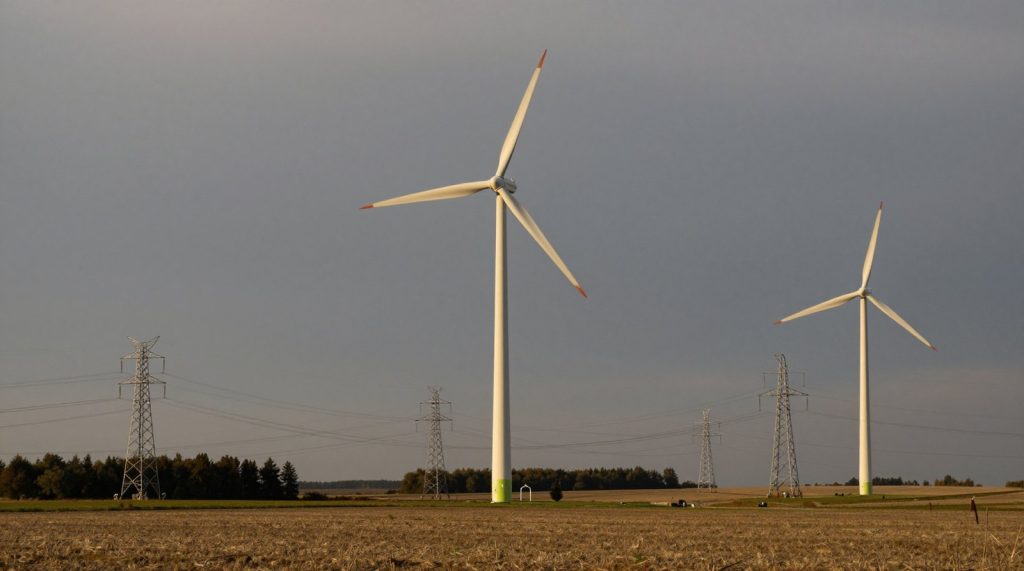
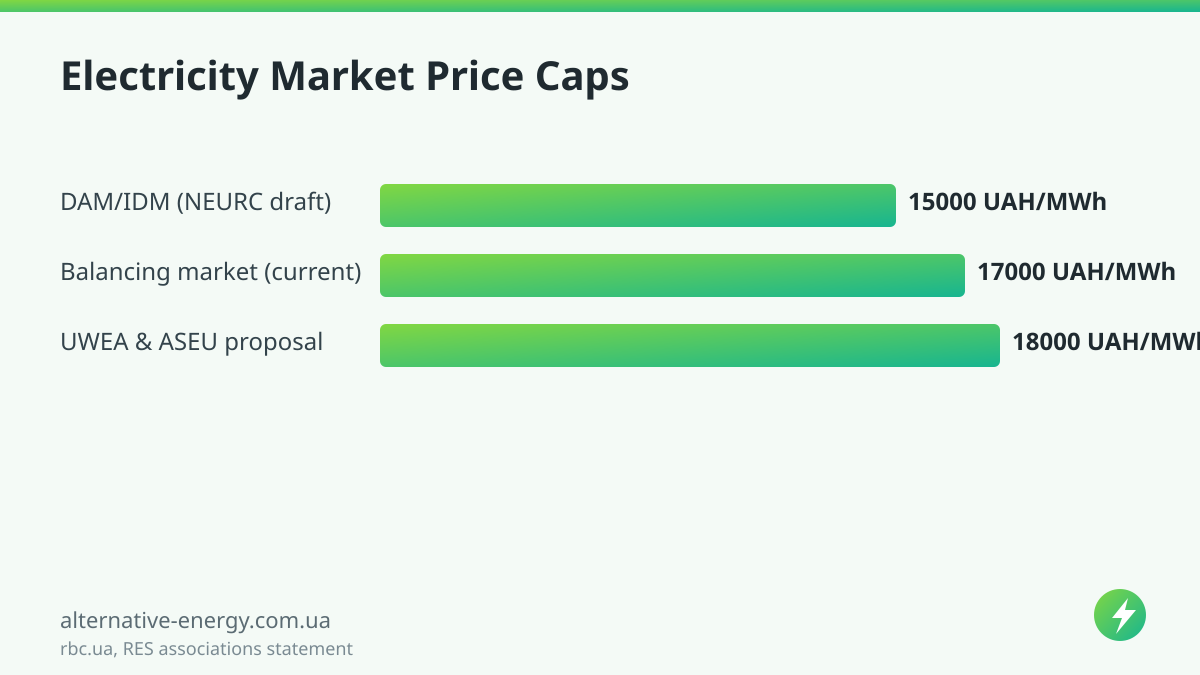
The Ukrainian Wind Energy Association (UWEA) and the Association of Solar Energy of Ukraine (ASEU) have submitted a joint proposal to NEURC urging the regulator to revise its draft resolution on electricity price caps and raise the upper ceiling to 18,000 UAH/MWh.
Key points of the appeal:
- UWEA and ASEU are asking NEURC to raise the price cap to 18,000 UAH/MWh.
- The current NEURC draft keeps the ceiling for the intraday market and day-ahead market (DAM) at 15,000 UAH/MWh, and for the balancing market at 17,000 UAH/MWh.
- In September, balancing market prices reached 100% of the current maximum during certain peak hours on 8–10 September.
What Concerns the RES Associations
According to rbc.ua, the appeal stresses that the existing price ceiling level “effectively constrains market-based pricing.” In plain terms: prices have nowhere to go even when demand and generation costs objectively call for higher levels.
This is particularly significant given the urgent need to build out distributed capacity ahead of the heating season.
When Prices Already Hit the Cap
According to the signatories, in September balancing market prices approached the current maximum of 17,000 UAH/MWh across a substantial share of hours. On 8–10 September, prices reached 100% of the current price cap during certain morning and evening peak hours — meaning the market literally hit the ceiling and could go no further.
For the industry, this is practical evidence rather than a theoretical concern: the constraint is already taking effect and cutting off part of the price signal that should otherwise incentivize additional high-cost capacity or electricity imports during periods of elevated demand.

What This Means for Wind and Solar Generation
For wind farms, solar power plants, and flexible generation assets, the price cap level is not an abstraction — it is a direct input into the business model. When peak-hour prices are artificially capped, part of the revenue that flexible capacity and energy storage systems (which profit from the spread between off-peak and peak prices) could otherwise earn is simply cut off. This directly affects the economics of new RES projects.
The position of UWEA and ASEU is not an isolated one. The Ukrainian National Committee of the International Chamber of Commerce and the Federation of Employers of the Fuel and Energy Complex of Ukraine had previously called for a review of the ceilings ahead of the heating season. In the former case, the argument was that excessively low price caps could restrict electricity imports from the EU and curtail gas-fired flexible generation. For the RES sector, the debate over the price ceiling is essentially a debate about market incentives for new wind and solar projects and the predictability of future revenues.
The final decision rests with NEURC. If the regulator keeps the limits at the proposed level, the market will — by the signatories’ logic — continue to hit the ceiling on a regular basis. If the caps are raised, the upper range of price swings will widen: for consumers, that means the risk of higher price spikes; for the industry, a clearer investment signal — amid a broader ongoing discussion about extending support schemes for solar and wind plants.
Sources: rbc.ua
Illustration generated with AI
Prepared by the Alternative Energy editorial team with the help of AI based on the sources listed; facts and figures were checked against them during automated editorial review. How we prepare articles