


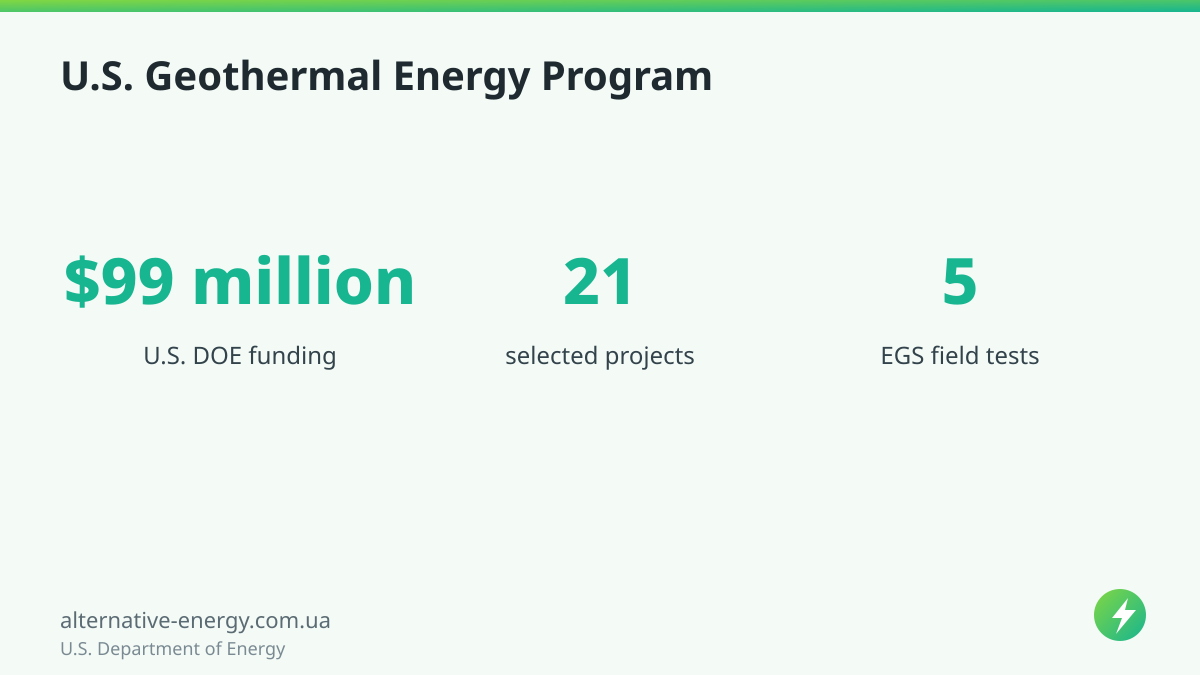
U.S. geothermal energy has received a fresh wave of federal support: the Department of Energy (DOE) has announced more than $99 million in funding for 21 projects across the sector. Five of those initiatives will conduct field tests of Enhanced Geothermal Systems (EGS) technologies, while the remaining 16 will focus on exploratory drilling to identify promising resources. All results will be made publicly available through the industry’s dedicated data repository.
Key highlights:
- Total program funding: over $99 million, announced on September 21, 2026.
- 21 projects selected: 5 for real-world EGS field testing, 16 for exploratory drilling.
- Data will be published in the DOE’s Geothermal Data Repository (GDR).
- The goal is to reduce technical risk and attract commercial investment in around-the-clock geothermal generation.
EGS and Exploratory Drilling: Where the Money Goes
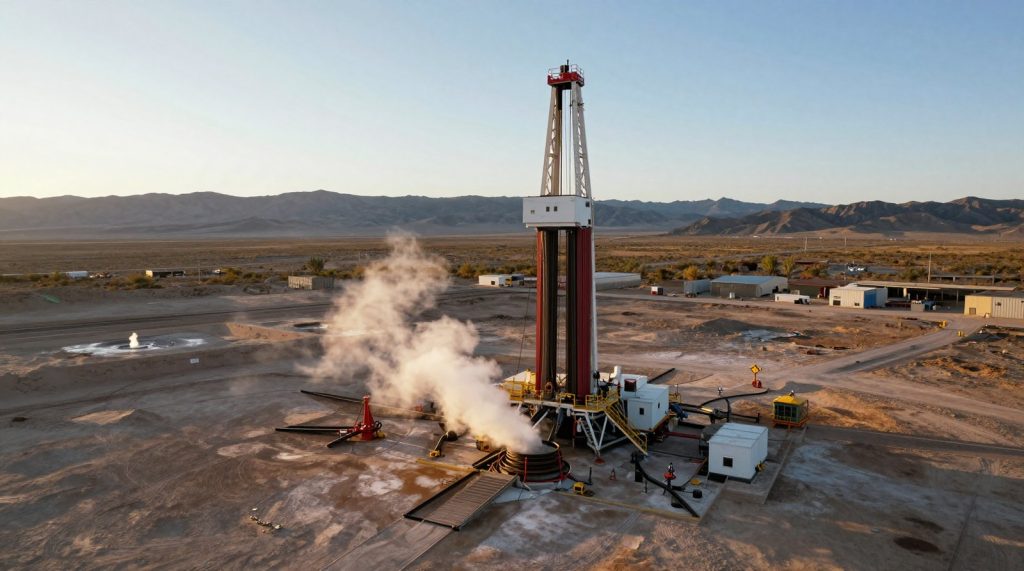
According to the U.S. Department of Energy, five of the selected projects will carry out field tests of Enhanced Geothermal Systems — technologies that extract heat from hot but dry or low-permeability rock formations. Water is injected under pressure into artificially created fractures, heats up underground, and returns to the surface as a working fluid. This approach theoretically extends the geographic reach of geothermal energy well beyond traditional hydrothermal basins with naturally occurring hot water or steam reservoirs.
The other 16 projects are centered on exploratory drilling. Their objective is to identify and characterize promising sites with potential for next-generation geothermal generation. Together, the DOE emphasizes, these two tracks are designed to lower technical and development risk, and to generate the data needed to support future commercial projects and investment.
The agency also highlighted that geothermal energy is capable of delivering firm, around-the-clock power capacity — strengthening the country’s overall energy security.

Open GDR Data as a Risk-Reduction Model
A key detail of the announcement is that all data collected during EGS field tests and exploratory drilling will be made publicly available through the DOE’s Geothermal Data Repository (GDR). The agency explicitly states that publishing open results will give industry, researchers, and other stakeholders access to site-level information — and extend the value of individual projects well beyond their specific locations.
This approach carries particular weight in the geothermal sector, where deep-resource exploration is an inherently risky and capital-intensive phase. When geology, temperature, and reservoir data enter an open repository, subsequent developers can select sites with greater precision and at lower cost.
Context: Federal Commitment to EGS
The new funding continues a series of federal investments in EGS technologies. Geothermal energy delivers firm, dispatchable power — a topic we covered previously in our article on Google’s investment in geothermal energy.
It is worth noting the DOE’s own caveat: selection for grant negotiations does not guarantee funding. The agency may cancel a selection during the negotiation phase, which means all 21 projects remain conditional participants in the program until contract procedures are finalized.
For countries still shaping their own geothermal strategies, the model itself is instructive: the public sector absorbs the highest-risk stages — exploration and field testing — while private capital enters at a more mature stage, with open data already available. For a broader look at what has been holding the sector back, see our overview of geothermal energy challenges and prospects. If similar open data repositories emerge in other countries, the cost of exploration could fall significantly, making geothermal energy more attractive to investors outside traditional volcanic regions.
Frequently Asked Questions
How does EGS differ from conventional geothermal power?
Conventional geothermal power relies on locations where nature has already provided hot water or steam in permeable rock. Enhanced Geothermal Systems create an artificial reservoir in hot but dry rock: water is injected under pressure, heats up within induced fractures, and returns to the surface as a working fluid. This theoretically opens geothermal generation to a much wider range of geographies than classical hydrothermal deposits allow.
When will results from these 21 projects become available?
The U.S. Department of Energy has not specified publication timelines. Data will be released to the Geothermal Data Repository (GDR) on a rolling basis as work progresses at each site.
Sources: U.S. Department of Energy
Illustration generated with AI
Prepared by the Alternative Energy editorial team with the help of AI based on the sources listed; facts and figures were checked against them during automated editorial review. How we prepare articles