


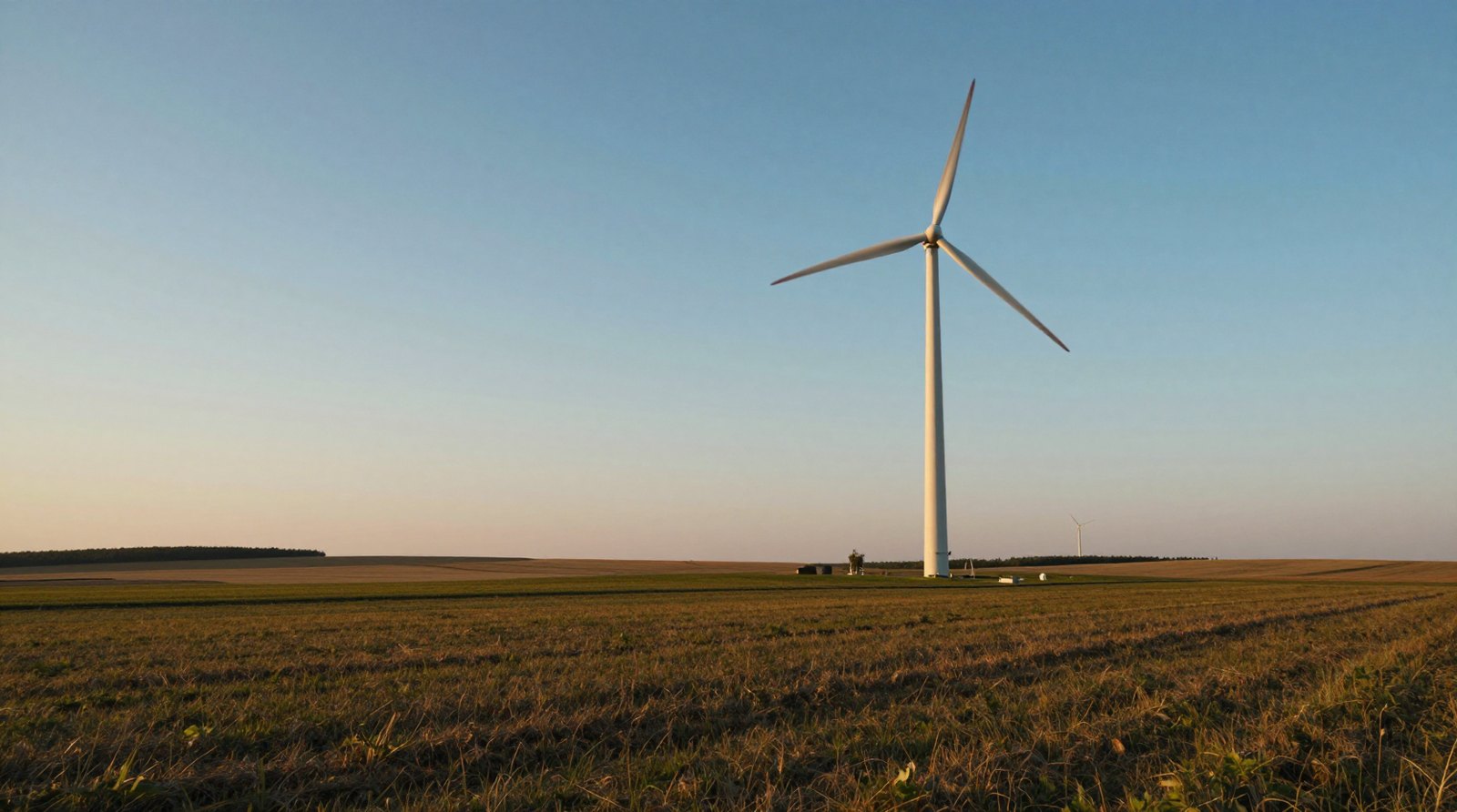
A banking perspective on wind energy economics: Raiffeisen Bank Ukraine’s blog breaks down the cost of 1 kW of installed capacity, how much electricity that kilowatt generates annually, and what wind turbine payback looks like under Ukrainian conditions — for both new and refurbished equipment. The figures, current as of early 2024, are useful for anyone building a loan model or comparing wind against solar for a farm or small business.
Key figures:
- ~$3,500 — average turnkey cost of a new installation per 1 kW
- 2,200–3,200 kWh — annual generation per 1 kW of a wind farm
- 5–7 years — payback period for new equipment; under 5 years for refurbished
- 9.05 euro cents/kWh — feed-in tariff for wind farms, in effect since January 2020
Cost per kW and What It Generates
According to the bank’s calculations, a new wind installation starts at roughly $3,500 per kilowatt of installed capacity. The core argument for wind is productivity: 1 kW of a wind farm yields between 2,200 and 3,200 kWh per year, while 1 kW of a solar power plant produces around 1,000 kWh. That’s a 2–3× advantage for wind at the same installed capacity.
Feed-in tariffs introduced in January 2020 set the rates at 9.05 euro cents per kWh for wind, 11.26 for solar, and 12.28 for small combined systems — up to 50 kW for households and up to 150 kW for businesses.
Why Wind Pays Back Faster in Ukraine Than in Europe
According to Raiffeisen Bank Ukraine (blog), the return on investment for a small European-made wind turbine in Ukraine is roughly three times better than in Europe itself. The factors cited in the analysis: cheaper land and lower operating costs.
There is also a spatial advantage. A 1 MW wind farm requires 30–50 sotkas of land, while a solar power plant of the same capacity needs around 2 hectares. For farm sites, industrial zones, and cooperatives, this means a smaller land footprint and greater flexibility in site selection.

Refurbished Equipment: A Different Entry Price
For those looking to reduce upfront costs, the bank’s blog cites examples from the refurbished industrial turbine market:
- Vestas 3 MW (2008) — approximately €600,000;
- Nordex 2.5 MW — around €350,000;
- Enercon 3 MW — also around €350,000.
These machines cost significantly less than comparable new units, and their payback period drops to five years. For a loan-based model, that means a shorter path to operating profit — though it comes with a different risk profile: residual turbine lifespan, installation logistics, and service availability.
Who Can Build and Where: Regulations and Regions
Ukrainian law provides a simplified procedure for small installations: households and energy cooperatives may install wind farms up to 50 kW, while small and medium businesses can go up to 150 kW. Larger projects above 5 MW go through competitive auctions — with an exception for three-turbine plants.
Sanitary setback requirements are also worth factoring in during site selection: under Ukrainian standards, industrial wind farms above 20 MW must be located at least 700 m from populated areas, while installations under 150 kW require only a 40 m setback. In terms of wind potential, the Black Sea–Azov basin remains the most promising region — Zaporizhzhia, Kherson, Mykolaiv, Odesa, and Dnipro oblasts. Industrial turbines of 80–120 m hub height achieve the best capacity utilization there.
What This Means for Project Owners
The banking analysis is most valuable for its reference figures: 1 kW at $3,500, annual generation of 2,200–3,200 kWh per kW, and a payback horizon of 5–7 years — these are the parameters to bring to a lender or plug into your own model. Refurbished equipment opens an alternative path: a lower entry cost and faster returns, but higher demands on technical due diligence. For a direct comparison with solar, our breakdown of a 5 kW home solar power plant covers the economics from the other angle, while the guide on choosing a wind turbine and the overview of wind farm pros and cons will help connect the financial model with the hardware.
Sources: Raiffeisen Bank Ukraine (блог)
Illustration generated with AI
Prepared by the Alternative Energy editorial team with the help of AI based on the sources listed; facts and figures were checked against them during automated editorial review. How we prepare articles


