


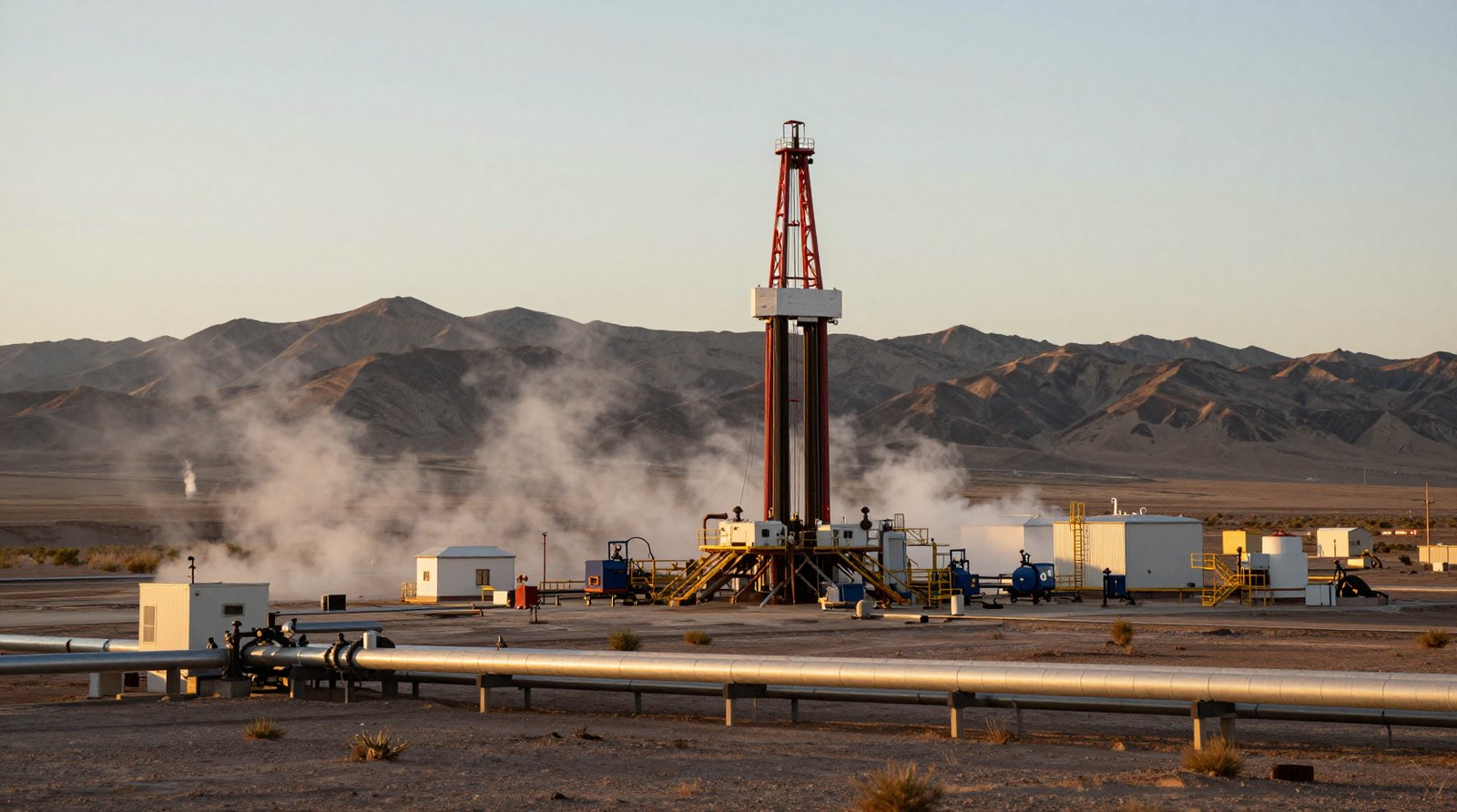
US-based Fervo Energy has become the first company in the world to bring a next-generation geothermal power plant to utility scale. The Cape Station project in Utah synchronized with the grid on September 24 and officially entered commercial operation on September 30 — one day ahead of the contracted schedule. The first block, rated at 33 MW, is now delivering carbon-free electricity to retail supplier Shell Energy in California.
Key facts:
- The world’s first utility-scale Enhanced Geothermal Systems (EGS) geothermal power plant.
- Initial 33 MW out of a planned 500 MW total; project cost is $2 billion.
- 400 MW contracted with Google; full commissioning expected in 2028.
- The first block took 23 months to build; subsequent blocks are targeted at 18 months.
How Enhanced Geothermal Systems Work
Conventional geothermal generation relies on naturally occurring hot water and steam in volcanically active regions. EGS takes a different approach: operators engineer an artificial reservoir deep within hot dry rock. Fervo applies horizontal drilling and hydraulic fracturing techniques borrowed from the oil and gas industry to circulate fluid through the created fractures, heat it to steam, and drive a turbine. This approach unlocks geothermal power generation for regions that have no natural hydrothermal resources.
According to canarymedia.com, Fervo already operates a 3.5 MW commercial pilot in Nevada — Project Red, commissioned in late 2023 — which validated the technology itself. Cape Station, however, is the first full industrial-scale deployment and the first to export power into a major grid.

Contracts, Offtakers, and Construction Pace
Phase I encompasses approximately 100 MW across three 33 MW blocks; the two remaining blocks are scheduled for commissioning by January 1, 2027. Phase II, covering 400 MW, is already under construction and expected to come online in 2028 — it is this output that Google will purchase under its 400 MW EGS power purchase agreement.
From groundbreaking to commercial operation, the first Cape Station block took 23 months. Fervo aims to cut that cycle to 18 months for subsequent blocks, a pace that — combined with modular construction — makes the technology attractive to data center operators seeking firm, around-the-clock carbon-free power. CFO David Ulry has stated that the company’s signed PPA portfolio exceeds 1 GW. In May 2026, Fervo went public, raising $1.9 billion in its IPO.
What Cape Station Means for the Geothermal Industry
The world’s first utility-scale EGS precedent sends a clear signal to investors: this technology can be scaled under commercial conditions, not just demonstrated in pilot projects.
For the global market, the message is equally significant — EGS is no longer confined to volcanic regions. If Fervo delivers on its promised 18-month block cycle and keeps costs in check, geothermal generation could become a meaningful answer to the demand from data centers and heavy industry for 24/7 carbon-free capacity. For countries without natural hot-spring resources — including much of Europe — the successful replication of Cape Station is worth watching closely: industrial precedents like this set the benchmarks for future project economics and financing terms.
Sources: Canary Media, TechCrunch, Renewable Energy Magazine
Illustration generated with AI
Prepared by the Alternative Energy editorial team with the help of AI based on the sources listed; facts and figures were checked against them during automated editorial review. How we prepare articles


