


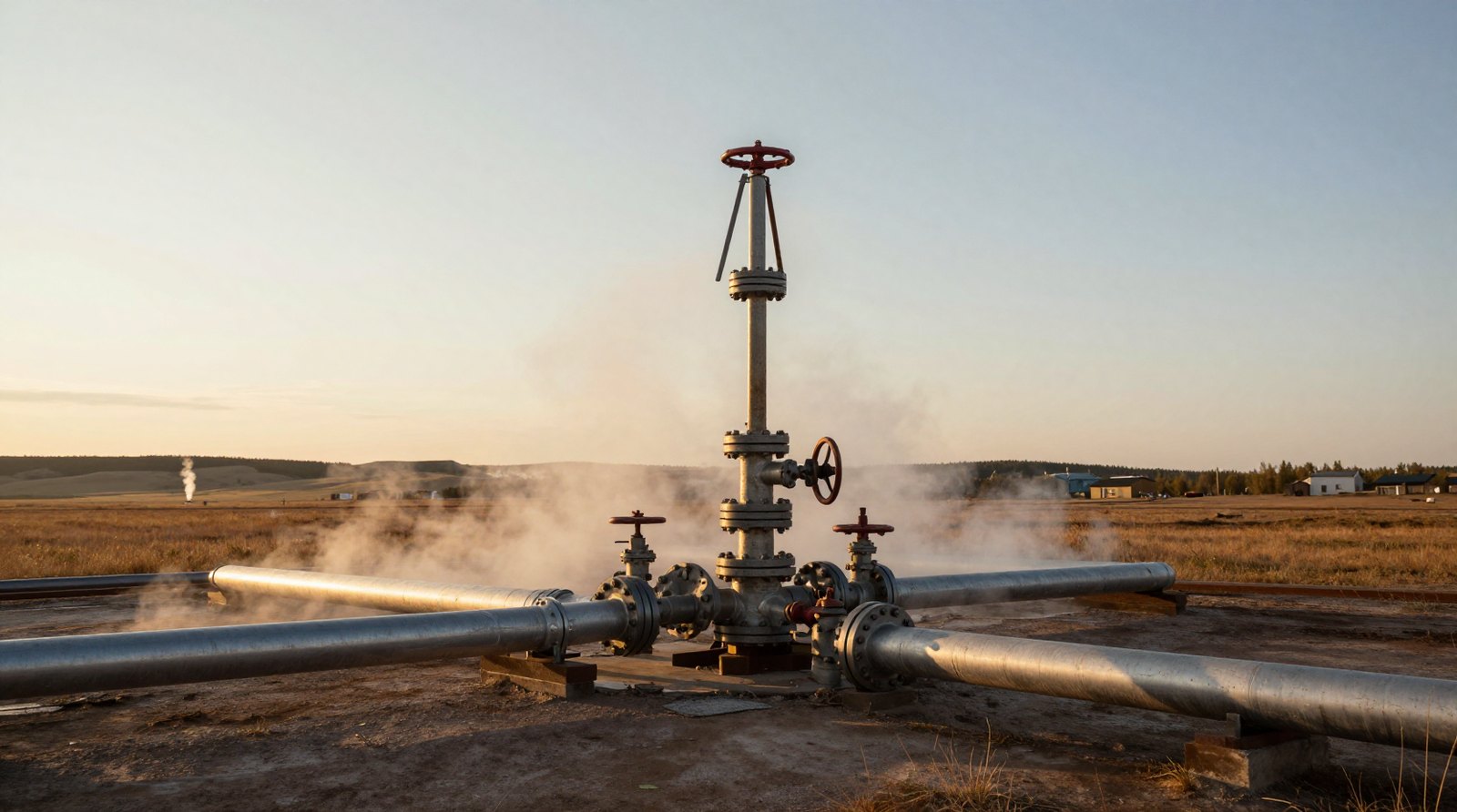
Kharkiv region geothermal energy has long been overshadowed by solar and wind projects — yet a substantial thermal resource lies right beneath the region’s surface. According to Tavria State Agrotechnological University (TSATU), based on data from the Ministry of Agrarian Policy of Ukraine, wells in the area are expected to yield a heat carrier at around 85 °C, with technically accessible equivalent gas savings estimated at 0.3 billion m³ per year.
Key figures:
- approximately 85 °C — expected heat carrier temperature at the wellhead;
- 2,000–3,000 m — depth of thermal waters in artesian basins;
- 0.3 billion m³/year — technically accessible equivalent natural gas savings;
- the southern and western parts of the region hold the largest identified reserves.
What Lies Beneath Kharkiv Region
The TSATU material, prepared using Ministry of Agrarian Policy data, describes artesian basins where groundwater circulating at depths of 2,000–3,000 metres reaches temperatures sufficient for direct heat supply. Geographically, the largest reserves are concentrated in the southern and western parts of Kharkiv region.
According to the classification cited by Wikipedia in reference to Ukraine’s “Ecologically Clean Geothermal Energy” programme, the 90–120 °C range is the working band for small geothermal power plants rated at 0.05–5 MW. Kharkiv’s 85 °C sits just below that threshold, making the region a natural candidate primarily for geothermal heating — with electricity generation via binary cycles as an additional option.

0.3 Billion m³ of Gas: How Significant Is That?
The figure of 0.3 billion m³ of natural gas per year is not a theoretical ceiling — it is an estimate of technically accessible savings for a single region alone. To put the scale in perspective: Wikipedia notes that Ukraine’s projected exploitable thermal water resources nationwide are equivalent to roughly 10 million tonnes of standard fuel per year, with identified use zones including Crimea, Zakarpattia, the Prykarpattia area, and Donetsk, Zaporizhzhia, Poltava, Kharkiv, Kherson, and Chernihiv regions. Kharkiv is just one of the country’s “warm” regions — yet even its individual share amounts to a meaningful number at the regional level.
Why This Matters for Flat-Terrain Ukraine
Geothermal discussions in Ukraine typically default to Zakarpattia or Crimea — regions with obvious geological activity. The Kharkiv case demonstrates that the resource exists in conventionally “flat” oblasts too: all it takes is a deep enough well into an artesian basin. The TSATU material explicitly identifies Kharkiv region as one of the most promising in terms of geothermal potential among the country’s lowland regions.
For communities and businesses, this is a compelling reason to view geothermal heat not as an exotic niche but as a practical way to reduce dependence on imported gas for heating, greenhouse farming, and agro-processing. For a broader perspective on the topic, see our overview of geothermal energy prospects in Ukraine and the article on hydrothermal and petrothermal energy, which explains the difference between subsurface resource types.
The Bottom Line
The main takeaway is straightforward: beneath Kharkiv region lies a concrete, quantified thermal resource — 85 °C water at 2–3 km depth with the potential to save 0.3 billion m³ of gas annually. These are not projections or marketing estimates; they come from a university analytical report based on data from the relevant ministry. Whether this resource is ultimately developed depends on drilling costs, tariff policy, and the willingness of communities and businesses to commit to long-horizon projects. But its very existence is a solid argument for keeping geothermal energy in the energy transition plan alongside solar and wind.
Sources: Таврійський державний агротехнологічний університет (матеріали Мінагрополітики України), Вікіпедія: Геотермальна енергія в Україні
Illustration generated with AI
Prepared by the Alternative Energy editorial team with the help of AI based on the sources listed; facts and figures were checked against them during automated editorial review. How we prepare articles


