


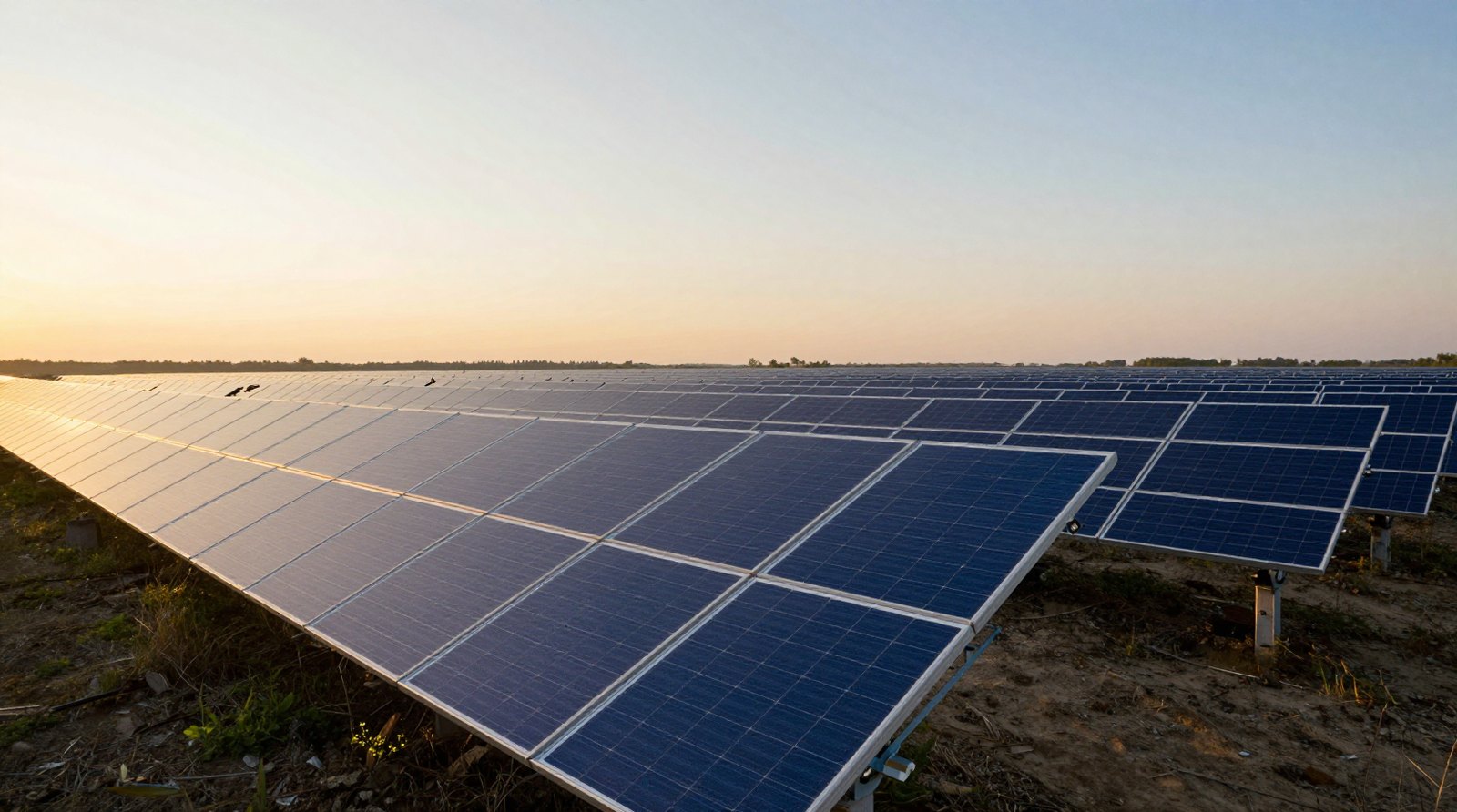
As of mid-2024, all three of Ukraine’s key solar module manufacturers had ceased operations. In practice, Ukrainian solar panels are no longer present on the domestic market: 100% of modules being installed are imported, predominantly from China. Meanwhile, the solar power plant market in Ukraine continues to expand — which makes the question “which panels to install in 2026” a practical one, not a theoretical exercise.
Key takeaways:
- Three specialized manufacturers — KNESS PV, Kvazar, and Prolog Semicor — are not operating.
- The KNESS PV plant in Vinnytsia (designed capacity: 400 MW/year) was halted for “modernization” back in 2021.
- In 2024, Ukraine added 800–850 MW of new solar capacity; in 2025, approximately 1.5 GW.
- Total installed solar generation capacity has exceeded 8.5 GW.
Three factories, one answer
According to PVknowhow (industry market intelligence), as of mid-2024 none of Ukraine’s three principal panel manufacturers was producing anything. KNESS PV in Vinnytsia had a designed capacity of 400 MW per year, but was shut down in 2021 for “modernization” and never restarted following Russia’s full-scale invasion. Kvazar and Prolog Semicor are likewise idle.
The consequence is straightforward: every module being mounted on Ukrainian rooftops and in fields today is imported, mostly from China. PVknowhow also notes that roughly 13% of utility-scale solar power plants in Ukraine have been damaged or destroyed. For context, the editorial archive contains pre-invasion coverage reporting that a solar panel manufacturing plant would be built in Ukraine and that Ukraine would produce its own solar panels. By 2024, that story had ended in a standstill.
The market is growing — entirely on imports
Despite the absence of domestic production, installed capacity keeps climbing year over year. In 2024, Ukraine added 800–850 MW according to PVknowhow. In 2025, the Solar Energy Association of Ukraine (SEAU) estimated new additions at around 1.5 GW, as reported by pv magazine. This brought total installed capacity above 8.5 GW.
According to the Association, the key growth drivers in 2025 were the commercial-industrial and utility-scale segments, particularly in combination with battery energy storage systems (BESS). Ukraine commissioned its first megawatt-scale solar-plus-storage projects, and companies that won long-term auctions from Ukrenergo in 2024 installed 398 MW of storage capacity. From July 2024, VAT and import duties on solar modules and BESS were abolished — a benefit extended through 2028.
Economics: $0.09 vs. $0.67 per kWh
The central argument for any solar power plant remains unchanged: the cost per kilowatt-hour. The residential segment alone has accumulated roughly 1.5 GW of total capacity — approximately 70,000 home systems. For an industry familiar with coverage like “Over 200 private solar power plants operating for Ukrainian households,” that figure speaks for itself.
SEAU expects at least 1.5 GW of new solar capacity to be commissioned in 2026, along with more than 3 GWh of energy storage systems. PVknowhow projects that total installed capacity could reach 14 GW by 2030.
What this means for buyers choosing panels today
There is no basis to wait for a domestically manufactured module at retail in 2026 — all three major factories remain idle, and neither PVknowhow nor SEAU data contains any indication of a restart. The answer to “which panels to install” is imported ones, and when choosing between options, what matters is not the flag on the label but the module and storage specs: manufacturer warranty terms, projected degradation rates, and the availability of in-country service. Zero VAT and zero import duties on modules and BESS through 2028 keep overall system costs at a level where return on investment is tied to the electricity tariff, not to fiscal premiums. And the 2025 trend toward solar-plus-storage pairings is less a marketing push than a market response to the risk of grid outages: 398 MW of storage capacity awarded through Ukrenergo auctions is no longer a pilot program.
Sources: PVknowhow (industry market intelligence), pv magazine
Illustration generated with AI
Prepared by the Alternative Energy editorial team with the help of AI based on the sources listed; facts and figures were checked against them during automated editorial review. How we prepare articles


